

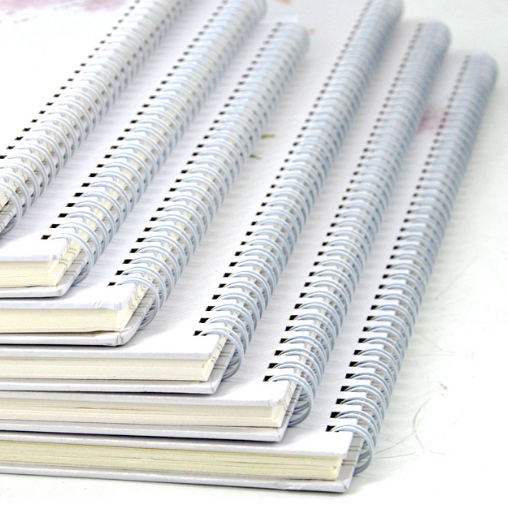
Wire Binding Explained: Types, Wire Sizes, Pitch, and How to Choose the Right Binding Machine
Wire binding is one of the most popular document and notebook binding methods used in schools, offices, print shops, churches, training institutions, and creative businesses.
It creates a professional finish, allows pages to turn smoothly, and helps documents stay organized and durable.
However, many beginners get confused when choosing:
- the right type of binding,
- the correct wire,
- or the right binding machine.
Different wire binding systems use different machines and accessories, and not all wires are compatible with every machine.
Understanding the differences can help you avoid costly mistakes and choose the best system for your work..
Types of Wire Binding
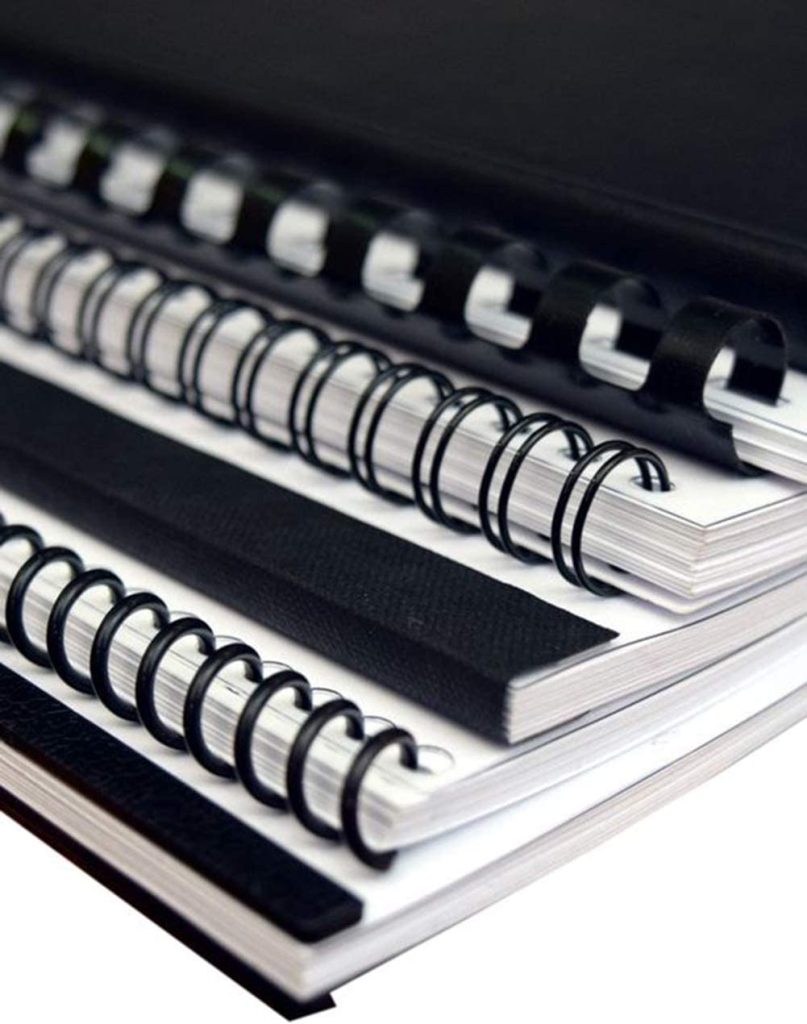
There are three common types of binding often confused together:
- Spiral Coil Binding
- Twin Loop / Double Wire Binding
- Plastic Comb Binding
Each system works differently and uses a different machine.
1. Spiral Coil Binding
Spiral coil binding uses a continuous plastic coil that is twisted through punched holes along the edge of the document.

Advantages of Spiral Coil Binding
- Affordable
- Flexible
- Can bend without damage
- Opens fully flat
- Can fold backward easily
- Suitable for manual work
One major advantage is that spiral coil binding can be done manually without needing an expensive closing machine.
2. Plastic Comb Binding
Plastic comb binding uses a plastic comb with multiple rings that open and close around punched pages.
Advantages of Comb Binding
- Cheap
- Easy to use
- Pages can be added or removed
- Good for office use
Comb binding is one of the most affordable binding systems.

3. Twin Loop / Double Wire Binding
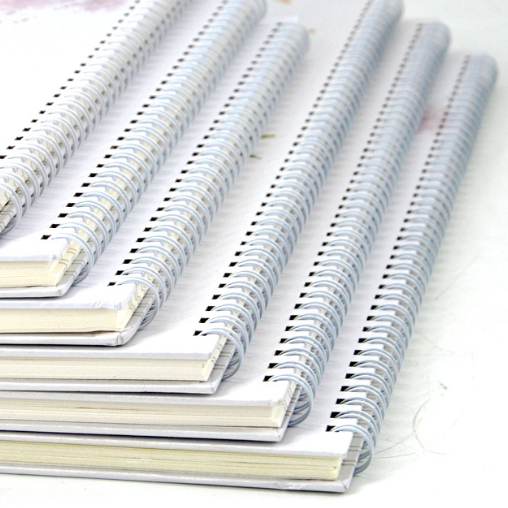
Twin loop wire binding, also called double wire binding or Wire-O binding, uses metal wire loops to hold pages together.
This is one of the most professional-looking binding systems available.
Advantages of Twin Loop Binding
- Professional appearance
- Strong and durable
- Pages turn smoothly
- Opens flat
- Ideal for business and premium documents
- Better appearance than plastic comb binding
Important Note
Twin loop wire requires: a wire closing machine or wire closer. Unlike spiral coil, the wire must be closed properly after insertion.
Understanding Twin Loop / Double Wire Binding
Since twin loop wire binding is one of the most professional and durable systems, it is widely used in offices, print shops, schools, and notebook production businesses.
Twin loop wire is mainly classified in two ways:
- Pitch
- Diameter
1. What Is Wire Pitch?
Pitch refers to: the number of loops per inch along the wire. The pitch determines: hole spacing, wire compatibility, and machine compatibility. The wire and machine MUST match the same pitch.
The Two Main Wire Pitches
3:1 Pitch
Meaning: 3 holes per inch. This is the most common twin loop wire pitch in Kenya.
2:1 Pitch
Meaning: 2 holes per inch. 2:1 pitch is used for: thicker books, large manuals, and high page count documents. It uses larger wire sizes and wider hole spacing.
2. Understanding Twin Loop Wire Diameter
The diameter refers to: the size of the wire loop Larger diameter wire holds more pages. Smaller diameter wire holds fewer pages.
Common Sizes and Uses
| Wire Diameter Size | Common Uses | Approx. Capacity |
|---|---|---|
| 1/4 inch (6.4mm) | Thin booklets | 20–30 sheets |
| 5/16 inch (7.9mm) | School notes, small notebooks | 40–50 sheets |
| 3/8 inch (9.5mm) | Planners, reports | 60–80 sheets |
| 1/2 inch (12.7mm) | Manuals, training materials | 90–120 sheets |
| 9/16 inch (14.3mm) | Project reports, notebooks | 100–130 sheets |
| 5/8 inch (15.9mm) | Thick manuals | 120–150 sheets |
Final Thoughts
Choosing the correct binding system depends on:
- the type of document,
- page count,
- durability,
- appearance,
- and machine compatibility.
For most users in Kenya, twin loop wire binding with 3:1 pitch is one of the best and easiest systems to source and maintain. Before buying a machine or wire, always confirm:
- the binding type,
- pitch,
- and supported wire sizes.
You can explore wire binding machines, twin loop wire, and binding supplies on the links below
Binding Wire and Binding Machine and Strawboard
Disclaimer: Some images used in this article are for illustrative and educational purposes only and are not the original property of Handmade Soko.