

How Do I Price My Craft?
The formula
One of the most common questions among makers, artisans, and creative entrepreneurs is:
“How do I price my work?”
Spend enough time in craft groups, markets, or online forums and you will find no shortage of advice. Some people suggest multiplying material costs by a certain number. Others recommend charging by the hour. Some simply price their work according to what feels fair.
A commonly used pricing formula looks something like this:
Price = Materials + Labour + Overheads + Profit
This formula is useful because it encourages makers to think beyond the costs and recognize the value of their time.
It is also important to understand how much you spend on materials, tools, packaging, transport, market fees, electricity, and other business expenses. These numbers help establish the minimum price needed to avoid selling at a loss.
However, costs alone do not determine value.
This is because people are rarely buying materials alone. They are buying design, convenience, quality, craftsmanship, personal expression, and sometimes even a sense of connection.
This is where pricing becomes less about calculation and more about understanding the market.
Understanding Who You Are Selling To
In any market, not every product is competing for the same customer.
Some products are designed to be affordable and accessible. Others are created for customers looking for something unique, personalized, or highly crafted.
Think about the difference between:
- A beaded bracelet purchased while waiting for the bus because it caught your eye and fit your budget.
- A matching jewellery set chosen as a Mother’s Day gift or anniversary present for someone special.
- A one-of-a-kind artisan piece carefully selected to complement a wedding gown or mark an important life event.
All these purchases are notable but each serves a different purpose and appeals to a different customer.
Before deciding on a price, it can be helpful to ask:
- What role does my product play in someone’s life?
- What alternatives are available to the customer?
- What makes my work different from those alternatives?
When people connect with a product, they are often responding to more than the item itself. They may be drawn to the story behind it, the skill involved in making it, the materials used, or the feeling it gives them.
The more clearly you understand who your product is for, the easier pricing decisions become. And once you understand your customer, it becomes easier to understand your competition.
What Else Can Customers Buy Instead?
Customers rarely make decisions in isolation. Whether consciously or not, they compare options.
This may not necessarily mean direct competitors, but other ways customers can satisfy the same need.
For example, a customer looking for a meaningful Mother’s Day gift may be considering handmade jewelery, handcrafted candles, artisan soaps, personalized artwork, or a gift hamper.
A couple planning a wedding may be choosing between handmade table décor, custom ceramics, fresh flowers, or other ways of creating a memorable experience.
These products may look very different, but they are competing to fulfil the same need.
This tells us that handmade products do not always compete on price. In fact, many successful craft businesses compete on something entirely different.
They compete on originality, quality, identity and craftsmanship.
Understanding the choices available to your customer helps clarify where your work fits in the market, why they are choosing your product and what makes it valuable.
It also helps reveal one of the greatest indicators of value: demand.
What Is Demand Telling You?
Demand can tell us a great deal about value.
If people regularly ask about a particular product, request custom versions, return to buy again, or recommend it to others, those are signals worth paying attention to.
Likewise, if a product consistently struggles to attract interest, the issue may not be the price alone. It may be the design, presentation, target audience, or market positioning.
Pricing works best when it is informed by observation.
What are customers asking for?
What are they excited about?
What are they willing to spend money on?
The answers provide valuable clues.
Pricing Is a Learning Process
Perhaps the most important thing to remember is that pricing is not a one-time decision.
It is a process.
Many successful makers adjust their prices over time as they learn more about their customers, their market, and the value their products create.
Rather than searching for the perfect formula, it can be more useful to view pricing as an ongoing conversation between your craft and the market.
Listen to customer feedback. Observe buying behavior. Pay attention to demand. Notice which products sell quickly and which take longer to find a buyer.
Over time, these insights become more valuable than any pricing formula.
A Different Question
Instead of asking:
“How much should I charge?”
Consider asking:
“What value am I creating, who is it for, and what is that value worth to them?”
That shift in thinking can transform pricing from a source of frustration into a powerful tool for building a sustainable creative business.
Final Thoughts
At Handmade Soko, we are committed to helping makers develop not only their craft skills but also the business knowledge needed to build sustainable creative enterprises. Through our articles, resources, community discussions, and training opportunities, we aim to support creative entrepreneurs at every stage of their journey.
If you found this article helpful, we invite you to explore more resources on our website and create a free account to stay connected with upcoming opportunities, tools, and programmes designed for makers and small creative businesses.
We would also love to hear from you. How do you approach pricing your work? Have you found a strategy that works for your craft? Leave a comment below and join the conversation.
Because great creative businesses do not start with pricing.
They start with understanding people, creating value, and sharing that value with the world.
To continue learning and connect with other makers, follow Handmade Soko on Facebook and Instagram, where we regularly share practical tips, inspiration, opportunities, and stories from the creative community.
Handmade Soko is more than a collection of articles—it’s a growing community. Explore our listings to discover talented makers, trusted suppliers, creative services, workshops, and opportunities, and see what Kenya’s creative community is building together.
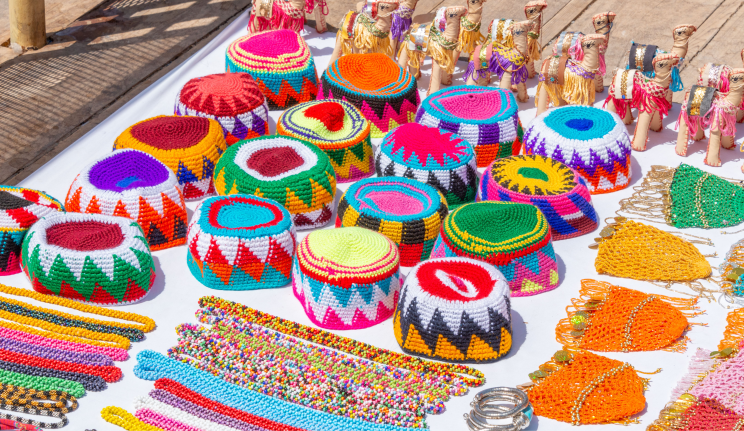
Featured image courtesy of pexels